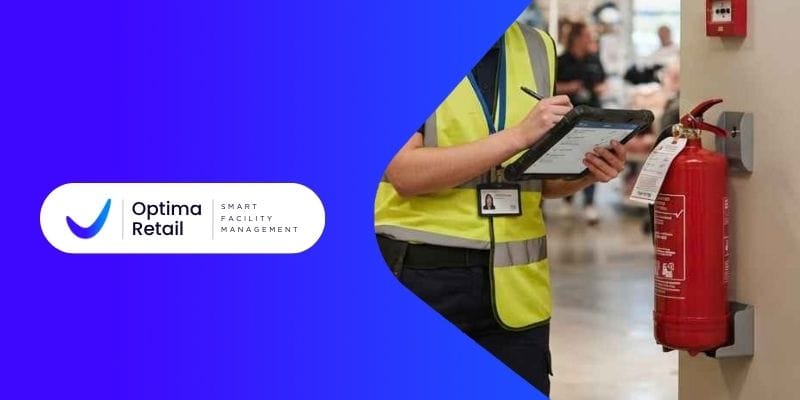
An electrical fault in retail premises is not just an inconvenience: it can stop sales, affect safety, damage equipment and create a poor shopping experience. The key is to act quickly and sensibly, identify whether the issue is isolated or structural, and arrange a professional inspection that gets the business back to normal without unnecessary risk.
When the incident affects the operation of the business, the safest option is to use a service equipped to resolve electrical faults in commercial environments, especially in shops, franchises or chains with long opening hours and critical equipment connected.
A power cut in a shop can have many causes: from a temporary overload to a damaged electrical panel, current leakage, lighting failure or a fault in the air conditioning system. At Optima Retail, we work with commercial premises where every minute of downtime matters, so the diagnosis must go beyond simply “switching the breaker back on”.
What to do first if the power goes out in your shop
When there is a power cut in a shop, the first step is to stay calm and check the scope of the issue. It is not the same for one lighting circuit to fail, for the whole premises to go dark, or for the problem to affect other businesses in the building too. This initial assessment helps determine whether it is an internal fault or an external supply issue.
If the electrical panel is accessible and there are no visible signs of danger, you can check whether the main switch, residual current device or a circuit breaker has tripped. Even so, caution is essential: if it trips again after being reset, or if there is a burning smell, sparks, unusual noise or heat around sockets and protective devices, do not keep trying. In premises open to the public, safety must come first.
- Check whether the power cut affects only your premises or nearby businesses too.
- Inspect the electrical panel only if you can do so without touching cables or damaged components.
- Disconnect non-essential equipment before attempting to reset a protective device.
- Do not handle sockets, extension leads, light fittings or electrical panels if there is a burning smell or overheating.
- Contact an emergency electrician for commercial premises if the fault repeats or you cannot identify the cause.
These checks can help reduce the immediate risk, but they do not replace a technical inspection. In retail, an issue that appears minor can conceal a problem with load, insulation or electrical distribution that will return at the worst possible moment.
Common causes of an electrical fault in commercial premises
The electrical installation in commercial premises works longer hours and under greater demand than a domestic system. Lighting, air conditioning, point-of-sale terminals, cameras, signage, screens, IT equipment, motorised shutters and alarm systems can all run at the same time throughout the day. That level of use means wear and tear builds up.
With our retail clients, we often find that many faults do not appear suddenly. First come flickering lights, occasional RCD trips, warm sockets, light fittings that fail too early or equipment that restarts unexpectedly. When these warning signs are normalised, risk increases and the solution usually becomes more urgent and more expensive.
Overloads caused by too many connected devices
An overload occurs when a circuit has to handle more demand than it was designed for. This is common in premises that have added new equipment without adapting the electrical installation: screens, fridges, additional air conditioning, decorative lighting or campaign-specific equipment. The result may be a tripped protective device, overheated wiring or partial outages.
The solution is not to add more extension leads or adaptors, but to review load distribution, available power, the condition of the electrical panel and the real capacity of each circuit. At Optima Retail, we design electrical solutions for shops that need stable operation, not temporary fixes.
Faults in the electrical panel
The electrical panel is the point from which power is protected and distributed throughout the premises. If there are outdated protective devices, loose connections, worn RCDs or unclear circuit distribution, the shop may suffer repeated outages without an obvious cause. A panel in poor condition compromises the safety of staff, customers and equipment.
Inspection and maintenance of electrical panels helps detect hot spots, unsuitable protective devices and poorly sized circuits. This is particularly important for chains and franchises, where it is useful to apply consistent technical criteria across all points of sale.
Short circuits and earth leakage
A short circuit occurs when two conductors come into contact incorrectly, while earth leakage may be caused by damp, damaged insulation or faulty equipment. In both cases, the installation may cut the power as a protective measure. The clearest sign is that the RCD trips again and again.
If this happens, it is not advisable to keep resetting the system without a diagnosis. There may be damaged cables, damp light fittings, faulty machinery or defective sockets. A professional intervention can isolate the circuit, locate the source and carry out the repair without putting the premises at risk.
Faulty retail lighting
Lighting does more than allow customers to see the product: it shapes the perception of the shop, comfort and safety. Flickering, dark areas, light fittings that fail frequently or circuits that switch off may indicate problems with drivers, transformers, connections, protective devices or poorly distributed consumption. In a retail environment, lighting is part of the shopping experience.
Shop electrical maintenance should include the inspection of lamps, spotlights, track lighting, associated panels and emergency lighting. In addition, when older systems are replaced with LED lighting, it is important to check compatibility and load levels to prevent future faults.
Air conditioning, UPS systems and critical equipment
Many power cuts are linked to air conditioning systems that demand too much energy, equipment with earth leakage or installations that have not been adapted to real consumption. An air conditioning unit that trips protective devices during opening hours can affect both customer comfort and staff performance. Here, the problem is not only electrical: it is operational and commercial.
In premises with point-of-sale terminals, servers, security systems or sensitive equipment, the UPS should also be checked. These uninterruptible power supply systems help prevent sudden interruptions, but they require testing and maintenance to ensure they will respond properly when a real incident occurs.
Risks of ignoring an electrical fault in retail
Putting off an electrical repair may seem like a way to save money, but in commercial premises it often has the opposite effect. An unresolved fault can lead to lost sales, damaged equipment, temporary closures, complaints, safety issues or technical non-compliance. The visible fault is often only the symptom of a larger cause.
A poorly maintained installation also affects the image of the business. A shop with flickering lights, unusable sockets, inconsistent air conditioning or outages at the till suggests a lack of control. In high-footfall retail spaces, that perception can harm customer trust and staff productivity.
| Warning sign | Main risk | Recommended action |
|---|---|---|
| The RCD trips repeatedly | Current leakage, faulty equipment or damaged insulation | Disconnect equipment and request a technical diagnosis |
| Burning smell or warm sockets | Overheating and potential fire risk | Cut power to the area and do not handle the installation |
| Constant flickering lights | Connection issues, load problems or faulty components | Inspect the lighting circuit and protective devices |
| Outages when air conditioning starts | Overload or a fault in the connected equipment | Check consumption, circuit and electrical condition of the system |
| Partial outages at the till or POS | Sales interruption and possible data loss | Inspect sockets, UPS and load distribution |
This quick overview helps prioritise the issue, but it should not replace a full inspection. In commercial installations, the important thing is not only to restore power, but to ensure that the fault will not happen again once the premises are fully operational.
When to call an emergency electrician for commercial premises
Some incidents cannot wait until the next scheduled maintenance visit. If the power cut affects opening, the till, general lighting, cameras, alarms, air conditioning or emergency systems, you need an urgent response. In these cases, an emergency electrician for commercial premises must act with fast diagnosis and commercial awareness, understanding that the business needs to recover operations as soon as possible.
Immediate assistance is also advisable when the fault repeats, even if the premises are still operating. An RCD that trips every few days, a circuit that remains out of service or a panel that gives off heat are all signs that the installation is working at its limit. Urgency is not always a total blackout: sometimes it means preventing the blackout before it happens.
- The electrical panel will not allow a protective device to be reset.
- The outage affects critical areas of the point of sale.
- There is a burning smell, sparks, noise or overheating.
- The fault repeats without a clear cause.
- Equipment has been damaged after a voltage surge.
- The premises need to open but cannot operate safely.
At Optima Retail, we offer a 24-hour emergency service for electrical incidents in shops and commercial premises. Our approach combines rapid response, technical inspection and a maintenance-led perspective, because resolving an emergency properly also means preventing the next one.
How to prevent power cuts with shop electrical maintenance
Preventive maintenance is the most effective way to reduce faults, operational downtime and unexpected costs. Instead of waiting for the shop to lose power, critical points in the installation are inspected to detect wear, overloads, loose connections, unsuitable protective devices or equipment beginning to fail. It is a particularly useful strategy for businesses where continuity is a priority.
Our shop electrical maintenance service is designed for commercial premises, chains, franchises and points of sale that need stability, regulatory compliance and centralised management. In our case, we do not review the installation as an isolated element: we analyse it in relation to the real activity of the business, its opening hours, its equipment and its periods of highest demand.
What a commercial electrical inspection should include
An effective inspection should cover both safety and performance. It is not enough to check whether the lights are on; it is necessary to understand how power is distributed, which protective devices operate, which equipment concentrates the greatest load and which elements may cause short-term incidents. The aim is to anticipate faults.
In retail premises, this inspection usually combines visual checks, technical testing and preventive adjustments. It also allows improvements to be planned without interrupting commercial activity, which is essential when the premises have long opening hours or high-footfall campaigns.
- Inspection and maintenance of electrical panels.
- Checks on interior, decorative and emergency lighting installations.
- Inspection of sockets, switches and wiring.
- Electrical condition checks for air conditioning and heating systems.
- Maintenance of electrical safety systems, alarms and detection systems.
- UPS testing to protect sensitive equipment.
- Verification of protective devices, RCDs and circuit breakers.
With this type of maintenance, the premises gain more than safety: they improve efficiency, reduce incidents and avoid rushed decisions when a fault appears during trading hours.
Urgent solution: repair, inspect and prepare the installation
When an electrical fault occurs in commercial premises, the solution should follow a clear order: make the area safe, locate the cause, repair the fault and check that the installation is stable. An incomplete intervention may restore power for a few hours, but it will not solve the real source of the problem.
With our clients, the priority is to minimise operational downtime without compromising safety. That is why we take a practical approach: what the premises need in order to keep operating, which circuits are critical, which equipment must be protected and which improvements should be scheduled after the emergency. This way of working is particularly useful for chains with several shops, where a single technical point of contact speeds up management.
- Initial diagnosis of the scope of the fault.
- Inspection of the electrical panel and protective devices.
- Identification of affected circuits, sockets or equipment.
- Repair or replacement of damaged components.
- Load, safety and operational testing.
- Preventive recommendations to avoid further incidents.
This process allows for a rapid response without relying on temporary fixes. If the installation requires later improvement, it can be planned with the least possible impact on the business.
Why a shop needs an electrical installation designed for retail
A shop does not consume electricity evenly. There are demand peaks, long opening hours, campaigns, air conditioning systems, product lighting, window displays, security systems and sales technology. For that reason, the electrical installation in commercial premises must be designed and maintained with the reality of the point of sale in mind.
At Optima Retail, we design electrical solutions for chains, franchises and retailers that need operational stability, regulatory compliance and centralised management. This helps reduce incidents, avoid downtime and maintain a comfortable shopping experience for customers, whether in a single shop or across a network of premises.
An electrical fault may seem like an unavoidable incident, but many issues can be prevented with regular maintenance, load checks, panel inspections, protection for sensitive equipment and an urgent response when the first warning sign appears. If your premises have suffered a power cut, repeated tripping or lighting faults, the most important thing is to act before the problem affects commercial activity.