
Sensory marketing is the practice of designing what customers see, smell, hear and touch inside a shop so that the visit feels more enjoyable and the brand is remembered. Most retailers know it works; the hard part is making it work the same way across twenty stores, and keeping it working a year from now. These five sensory marketing examples are designed for chains and franchises, whether you are opening a new site or planning a shop refurbishment: they are repeatable, easy to maintain and measurable.
Taste is left out unless you work in food retail. For every other shop, the atmosphere is built from five specific decisions, which we summarise here before looking at each one.
| Idea | Sense | Key decision | What needs maintaining |
|---|---|---|---|
| 1. Lighting | Sight | Colour temperature and accent lighting | Replacing lamps with the same tone |
| 2. Scent | Smell | A subtle signature scent | Refills and diffuser cleaning |
| 3. Sound | Hearing | Tempo and volume by time of day | Speakers and music licence |
| 4. Materials | Touch | Surfaces customers touch | Cleaning and wear control |
| 5. Layout | Sight and space | Customer flow, colour and hero products | Fixtures and visual order |
The last column is the one almost nobody talks about. From a store maintenance point of view, atmosphere is lost to neglect far more often than to poor design: a bulb of the wrong tone, an empty diffuser or a faulty speaker is enough to undo an experience that took a lot of effort to build.
1. Retail lighting: the light that guides the eye
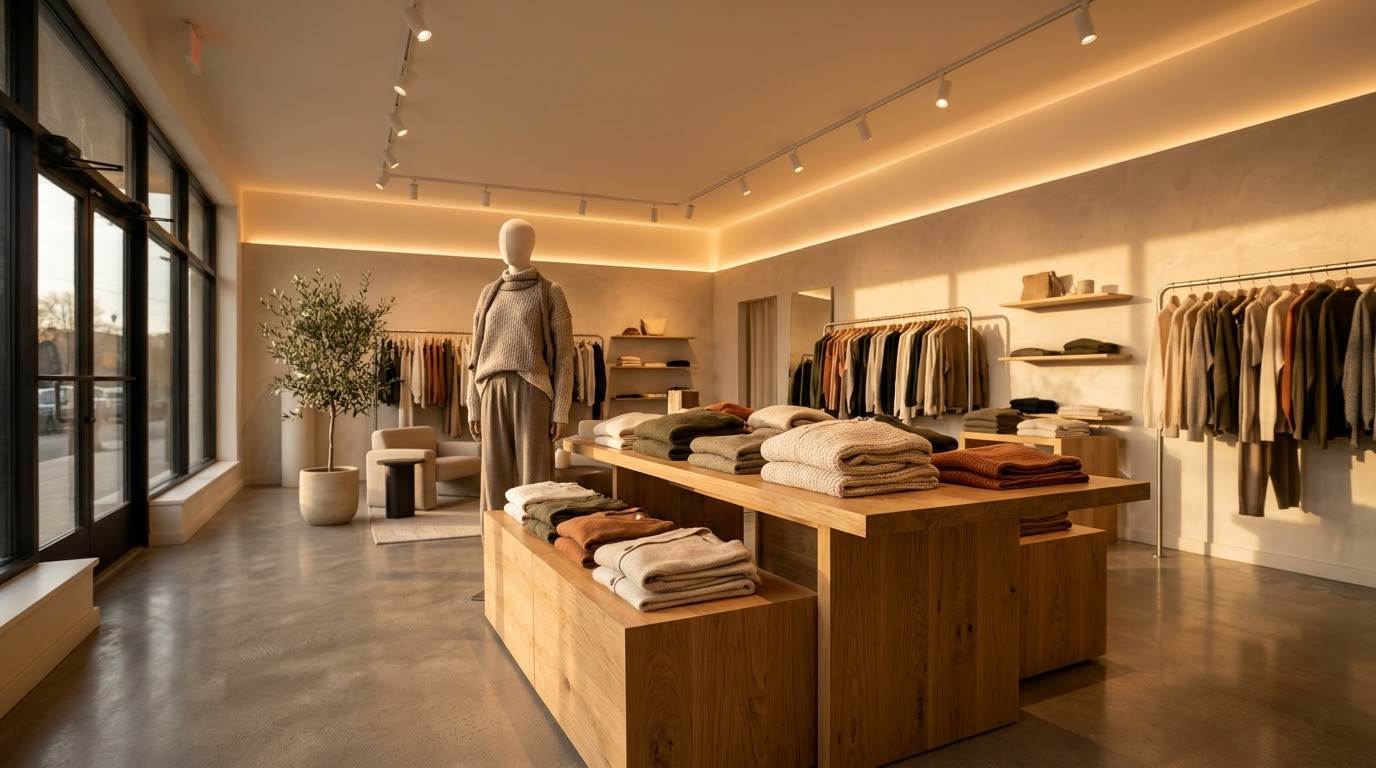
Lighting is the first decision in any store atmosphere because it determines what is seen first, what looks expensive and how customers feel as they walk in. Warm light, at around 3,000 K, usually suits clothing and homeware and creates a welcoming feel that encourages people to stay. A more neutral light, closer to 4,000 K, works better for technology or for products that need to be seen accurately.
Beyond temperature, quality matters. For colours to look true, choose fittings with a colour rendering index (CRI) above 90, which is especially useful in fashion, cosmetics and food. A garment that changes colour once it is taken outside leads to returns and mistrust, which is why the best practices for retail store lighting start with choosing the right fitting.
To apply shop lighting with care, these are the guidelines that work best:
- Combine soft general lighting with accent spotlights on the hero product, the entrance and the fitting rooms.
- Light walls and displays more strongly than the floor, so that the eye travels up and around the space.
- Avoid harsh contrasts between zones, which tire the eyes and shorten the visit.
There is also a key operational detail for chains: when LED lamps are replaced in different stores, batches can vary in tone. At Optima Retail we solve this by setting a single lighting standard for the whole chain, so that every replacement keeps the same atmosphere in every shop.
2. Scent marketing: a discreet signature fragrance
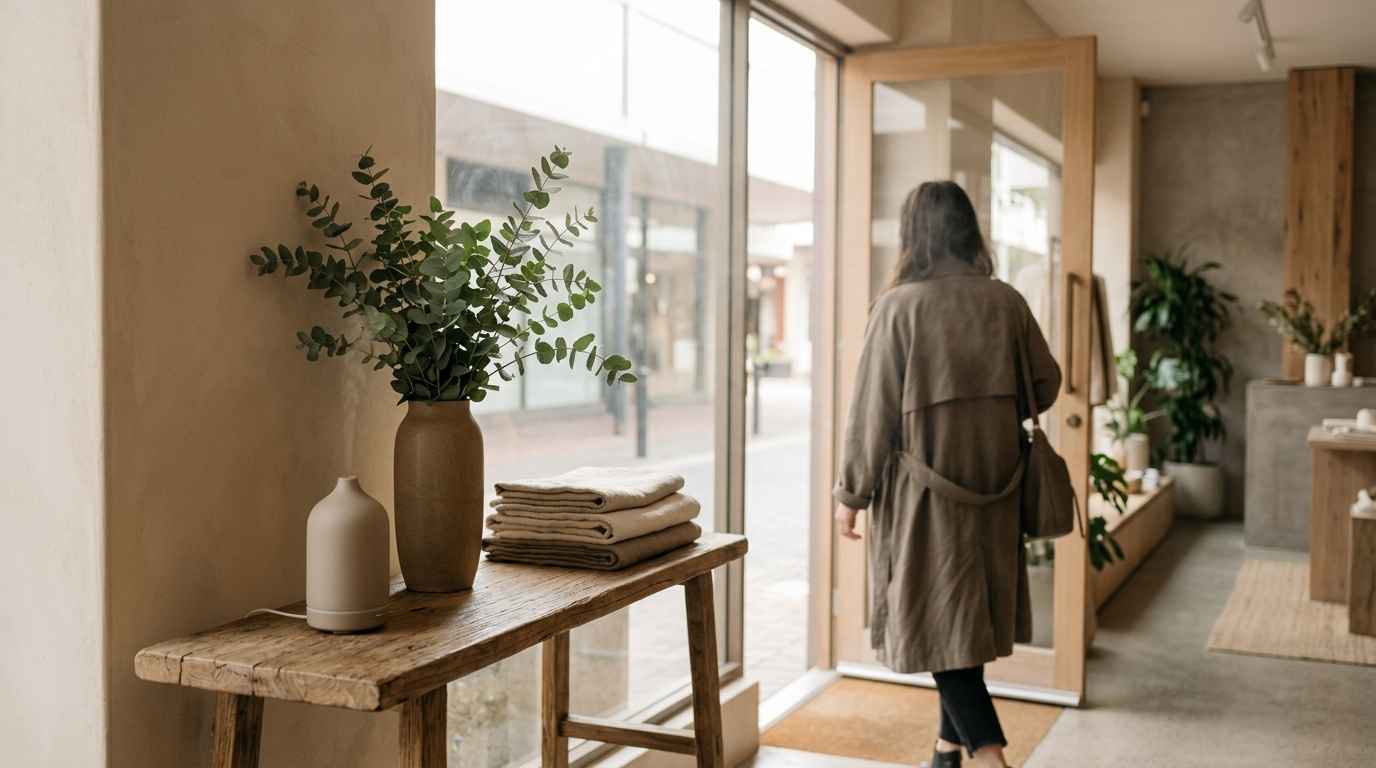
Smell is the sense most closely tied to memory, which is why scent marketing is one of the most popular approaches. A well-chosen fragrance makes customers associate the shop with a particular feeling and recognise it blindfolded. The practical rule is to pick a scent that fits the brand and keep it low in intensity: if customers consciously notice it, it is probably too strong.
Choosing the fragrance is only half of the job. The dose has to be calibrated to the size of the shop and its ventilation, because the same diffuser smells different in 80 m² than in 400 m². It is also worth thinking about your team, who spend the whole day there, and about customers who are sensitive to strong smells.
A good starting point is to follow these steps:
- Define a single brand fragrance, rather than changing scent by season or by store.
- Place the diffuser near the entrance or connect it to the air conditioning, depending on the size of the shop.
- Test the intensity at different times of day before fixing it.
Maintenance matters as much as the choice here. A poorly calibrated diffuser concentrates the scent in one area, and an empty one leaves the shop with no identity, so it is worth scheduling refills and cleaning, and checking how the scent interacts with the air conditioning.
3. In-store music: tempo and volume for the time of day
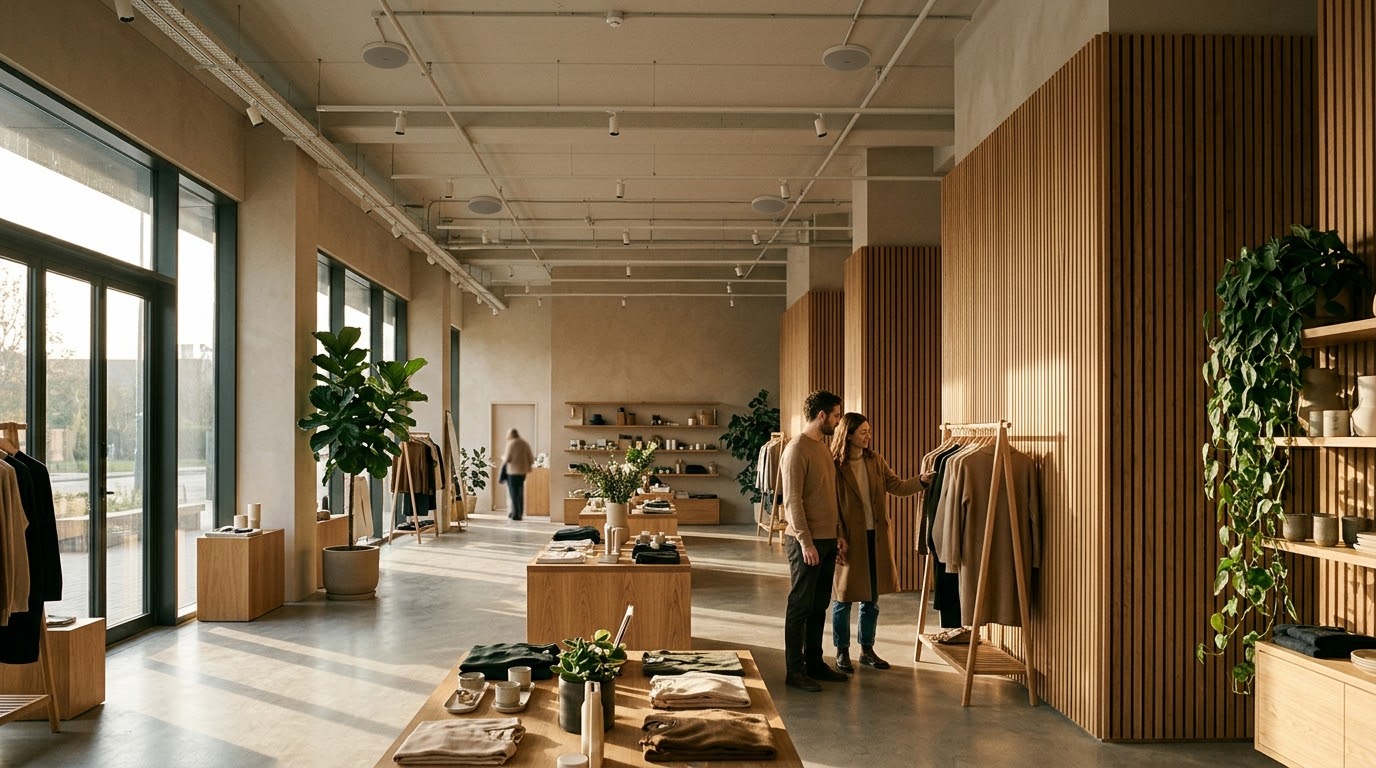
Music sets the pace of a visit without customers noticing. A slower tempo tends to lengthen the stroll around the shop and a livelier one speeds up turnover, so it pays to distinguish between times of day and types of customer: a shop does not need the same soundtrack first thing in the morning as on a busy Saturday afternoon.
Volume is the variable that is most often overlooked. It should let staff talk comfortably with customers, and stay similar across all the stores in the chain. A simple way to achieve this is to set up a playlist for each time slot and schedule it, rather than relying on whoever is at the till that day.
There are two practical points that are often missed:
- In the UK, playing background music in a shop requires a licence, usually from PPL PRS, so the simplest route is to use a business music service with the rights included.
- Acoustics count: ceilings and panels that absorb echo make the same playlist sound better at a lower volume.
Both are easier to solve when designing or refitting the shop than afterwards. A well-spaced speaker installation that is checked regularly avoids zones that are too loud and others that are silent.
4. Materials and touch: surfaces that invite contact
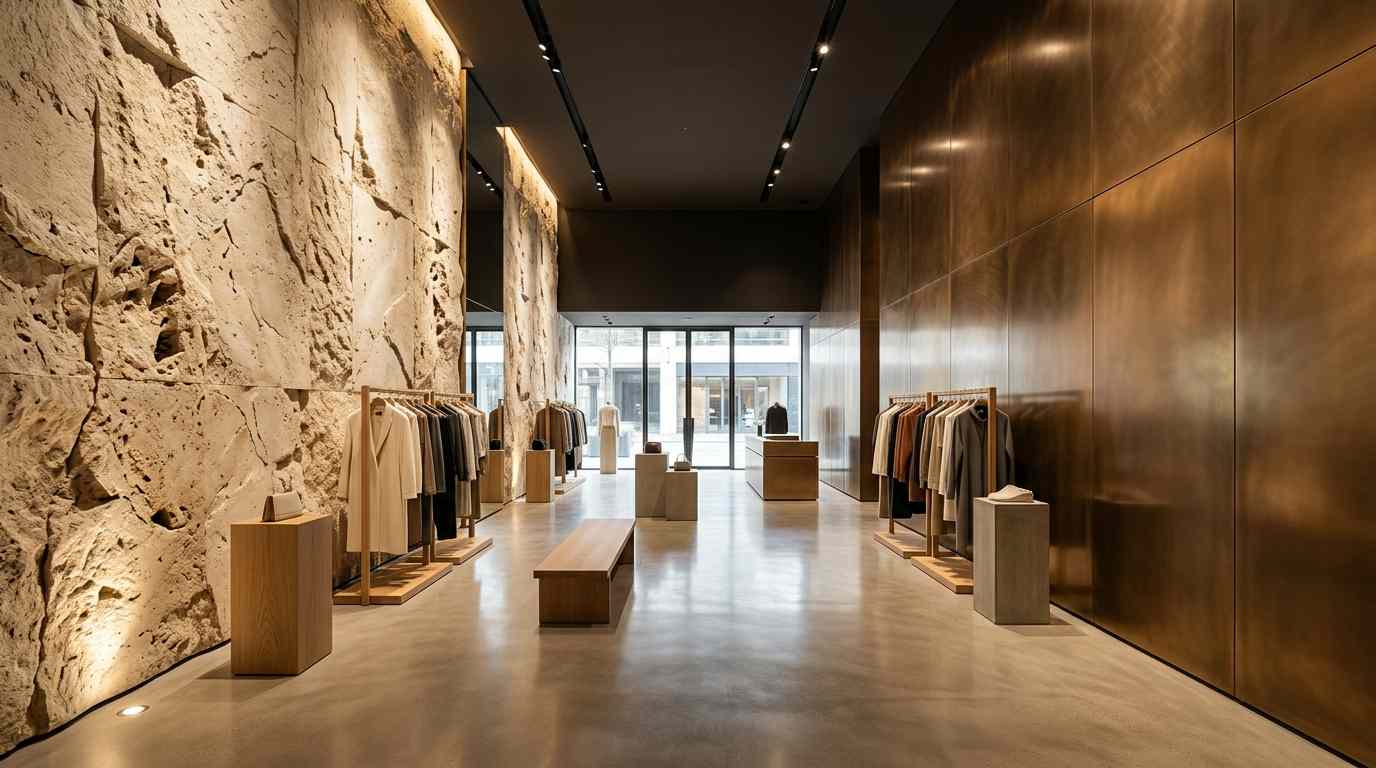
Touching a product raises the perception of quality and brings the buying decision closer. That is why touch is such a rewarding sense in physical shops: natural wood on counters, pleasant fabrics in waiting areas or accessible product testers invite contact without needing any explanation.
It is not only about the product. The points customers touch most, such as handles, handrails, fitting rooms and counters, deserve the best materials, because they build the sense of quality throughout the visit. A cold door handle or a rough fitting-room curtain matters more than it seems.
To choose materials, it helps to ask yourself these questions:
- Can it be cleaned every day without deteriorating?
- Will it withstand heavy use in a high-footfall shop?
- Can it be replaced like for like in two years’ time across all stores?
The downside is wear. A tactile surface that ages badly says exactly the opposite of what you want, so choose materials that are easy to clean and replace and set how often they are inspected as part of the design itself.
5. Store layout and visual merchandising: colour, flow and display
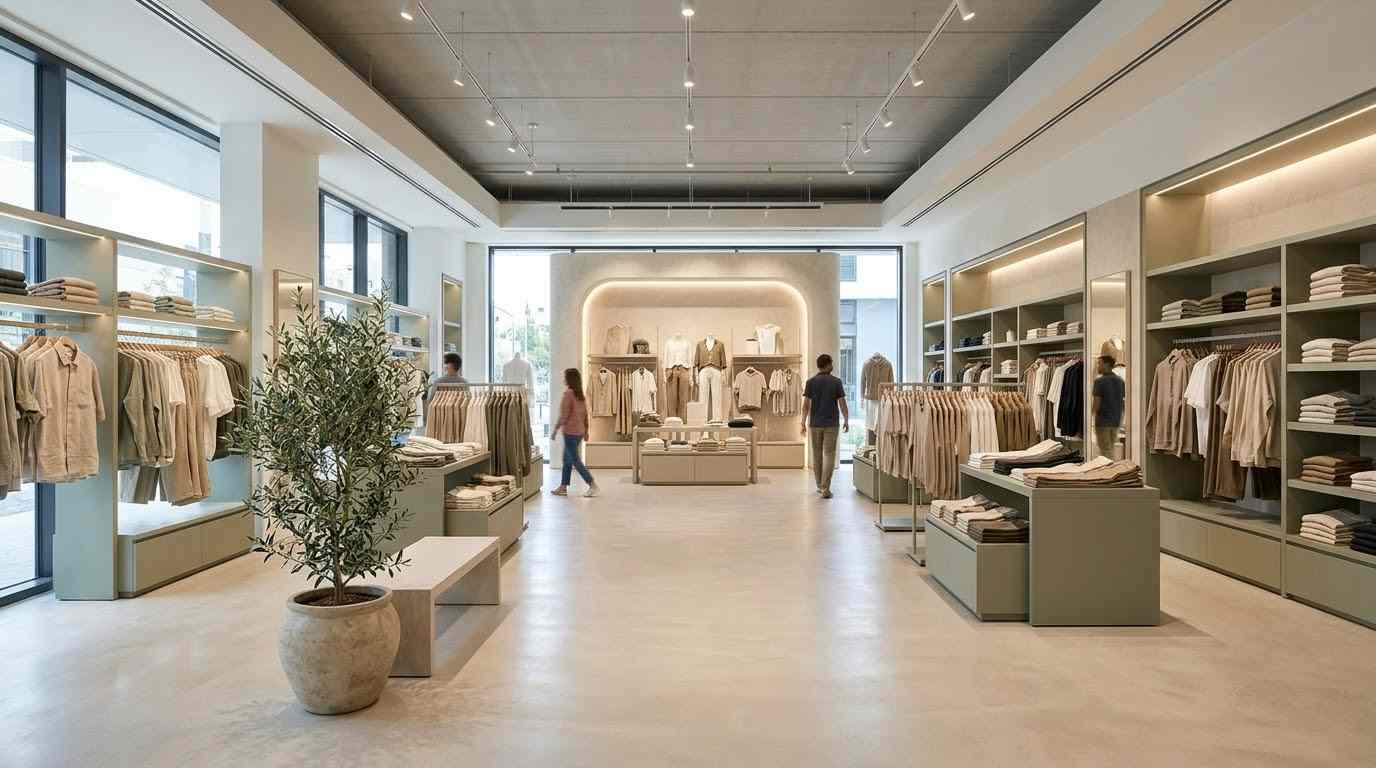
Store layout carries the most weight in retail interior design, because it shapes how customers move and what they see at each moment. A clear entrance zone helps people get their bearings, a well-planned route stops products from being missed and the hero item at eye level gets the attention it deserves.
Colour completes the picture. A palette limited to two or three brand tones gives shop design coherence without overloading it, and visual merchandising makes sure every zone tells a story: grouping by use or by collection usually works better than grouping by technical category.
For a chain, the decisive step is to put it in writing. A store manual with floor plan, colours and heights makes it possible to repeat the concept at every opening or refit, and helps any team maintain it without improvising. As a single point of contact for refurbishments and openings, at Optima Retail we apply it so that every new shop opens with the same atmosphere and with minimal disruption to store activity.
How to measure whether the atmosphere works
Before rolling changes out across the chain, test them in one or two pilot stores and compare them with similar stores that stay unchanged. Over four to six weeks, track dwell time, conversion and average basket value, and note any change in footfall or seasonality that could distort the comparison.
Change one sense at a time so you know what worked. If you change lighting, scent and music at once, the results will not tell you which decision improved the visit. When the numbers improve, you have the standard to replicate across the rest of the chain.
The perfect atmosphere is not the most eye-catching one, but the one that is repeated identically in every store and maintained daily. Define your sensory standard, test it in a pilot shop and, if you are planning a refurbishment or an opening, make sure it is written into the project from day one.