Luxury in 2026 is defined less by ostentation and more by a brand’s ability to build a coherent world around its products. The houses setting the pace combine desirability, craftsmanship, culture, service and memorable physical spaces, while using technology and operational excellence in increasingly discreet ways. Looking at these brands reveals where luxury retail trends are heading in 2026 and, more importantly, what is changing inside the shop itself.
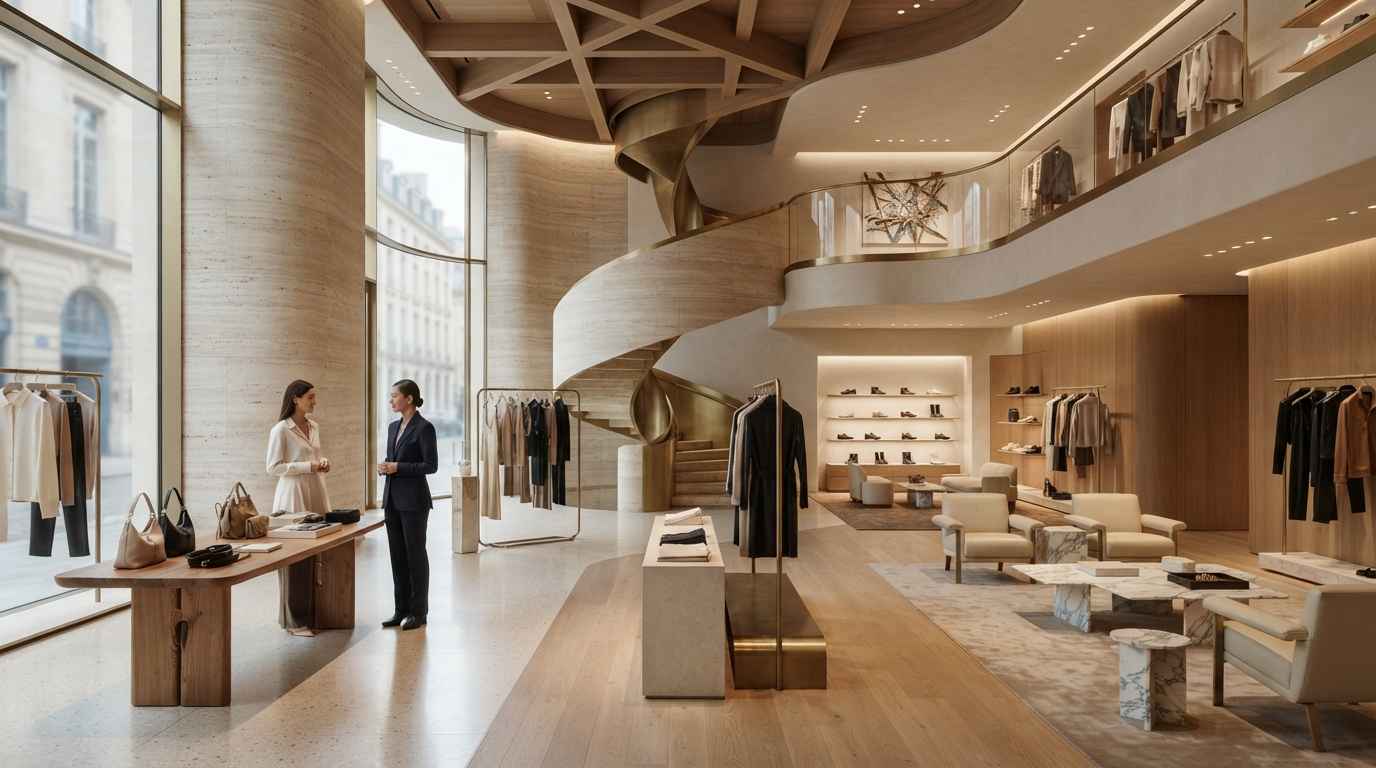
Luxury retail trends in 2026: what does it really mean to lead the market?
Talking about the brands that “dominate” luxury does not mean producing a ranking based solely on turnover. Leadership in 2026 has several dimensions: commercial strength, the ability to preserve exclusivity, cultural relevance, appeal among new audiences and a retail network capable of translating the brand’s identity into the physical environment.
The wider context has changed as well. After years of exceptional growth and successive price increases, consumers are becoming more selective and paying closer attention to what they receive in return. Perceived value is under scrutiny again. A spectacular boutique loses its impact if the service feels impersonal; a desirable collection loses some of its appeal if the shop fails to convey the same degree of care.
That is why the most interesting luxury retail trends of the year are shifting the focus towards a more complete and deliberate experience. Flagships that operate as cultural destinations, personalised attention, hospitality, visible craftsmanship, architecture connected to the city and almost invisible technology all form part of the same movement.
The luxury brands setting the pace in 2026
Not every major house is moving in the same direction. Some stand out for their commercial strength; others for rethinking the physical shop or building a particularly recognisable identity. The most useful insights emerge when we look at the decisions that recur among the sector’s most influential brands.
Louis Vuitton, Hermès, Chanel, Prada and Miu Miu, Loewe and Bottega Veneta represent different approaches to high-end retail. Taken together, however, they point towards a common direction: luxury is moving away from the shop as a simple showcase and turning each space into a tangible extension of the brand.
Louis Vuitton: when the flagship becomes a destination
Louis Vuitton continues to take the flagship store concept far beyond product display. Its recent projects combine architecture, art, gastronomy, exhibitions and multiple points of contact with the brand. The shop becomes somewhere worth visiting even when making a purchase is not the sole reason for going.
This approach matters because it competes with one of e-commerce’s structural advantages: buying online is usually quicker. A physical shop therefore needs to offer something a screen cannot replicate. Louis Vuitton responds with spaces capable of creating memories, attracting footfall and generating cultural conversation.
The lesson for the wider sector is not to reproduce monumental projects. It is to understand that a luxury flagship needs a purpose of its own: representing the city, telling a story, delivering exceptional service or creating an exclusive experience that makes the journey worthwhile.
Hermès: exclusivity built on consistency and patience
Hermès represents a different model. Rather than responding to the constant pressure for novelty, the house continues to rely on craftsmanship, product quality, controlled distribution and long-term relationships with its clients. Its strength shows that scarcity retains value when it is credible and supported by exceptionally consistent execution.
The house has continued to grow during 2026 despite a more complex international environment. Beyond the financial results, its position highlights an important trend: luxury consumers continue to reward what they perceive as genuinely difficult to replace.
In-store, this requires care at every level, from advice and service to materials, lighting, thermal comfort and the condition of the furniture. When the product is presented as exceptional, every detail of the premises becomes part of that promise.
Chanel: controlling the experience to protect brand value
Chanel retains one of the most recognisable identities in the sector and continues to rely on tightly controlled distribution. Its boutiques remain central to fashion, fine jewellery and watches, with particular emphasis on individualised service. Exclusivity is also created by deciding how and where the encounter with the client takes place.
The company has continued to make significant investments in brand activity and client engagement. That strategy fits a market in which selling more units is not necessarily the only goal. Protecting positioning can matter more than pursuing volume at any cost.
For physical retail, Chanel offers another useful lesson: creative renewal can coexist with recognisable codes. The shop needs to evolve without becoming a setting disconnected from the identity customers expect to find.
Prada and Miu Miu: two different speeds within one group
Prada Group provides one of the most interesting cases of 2026 because it brings together two brands at different stages of development. Prada continues to strengthen its position through a clearly defined intellectual and aesthetic identity, while Miu Miu has maintained strong desirability after several years of exceptional growth. Both demonstrate the value of having an unmistakable personality.
At Miu Miu, collaborations, cultural initiatives and communication that speaks effectively to younger audiences have made the brand far more than an alternative within the group. Prada, meanwhile, continues to show that contemporary sophistication can be built through consistency rather than the constant pursuit of trends.
For a retail network, this creates an interesting challenge: two brands may share corporate capabilities without sharing the same physical experience. Design, visual merchandising, service and every operational decision need to respect different brand codes.
Loewe: craftsmanship, art and retail with an identity of its own
Loewe has made its relationship with craftsmanship, art and design a structural part of its retail spaces. The CASA LOEWE concept combines collections with artworks, objects, materials and furniture, creating shops that feel closer to a collector’s home. The product is placed within a recognisable cultural context.
The opening of CASA LOEWE Ginza reinforced this strategy in 2026. The Tokyo space is designed as a complete expression of the house’s world while adapting its global identity to a specific location. The location stops being a simple container and becomes part of the brand narrative.
This approach helps explain why luxury flagship stores are increasingly incorporating art and local references. Absolute uniformity between countries becomes less appealing when customers are looking for characterful spaces and distinctive reasons to visit them.
Bottega Veneta: discretion and recognition without logomania
Bottega Veneta continues to occupy a distinctive position in contemporary luxury. Its focus on leather, product construction and a recognisable aesthetic that does not constantly depend on logos aligns with the growing appetite for more discreet expressions of exclusivity. An identity can be powerful without having to shout its name.
During 2026, the brand has continued to perform solidly within Kering, with particular strength in leather goods and high-value clients. Its example is a reminder that so-called quiet luxury goes much deeper than a neutral colour palette: it requires materials, finishes and service capable of justifying that discretion.
Applied to the retail environment, this places even greater emphasis on detail. A visually restrained interior makes poor lighting, wear and tear, unwanted noise, climate-control problems or damaged finishes easier to notice.
What the brands leading luxury retail have in common
Although their creative codes are very different, common patterns emerge. The physical experience is returning to a strategic position, but it is no longer understood as an accumulation of screens, eye-catching installations or visible technology.
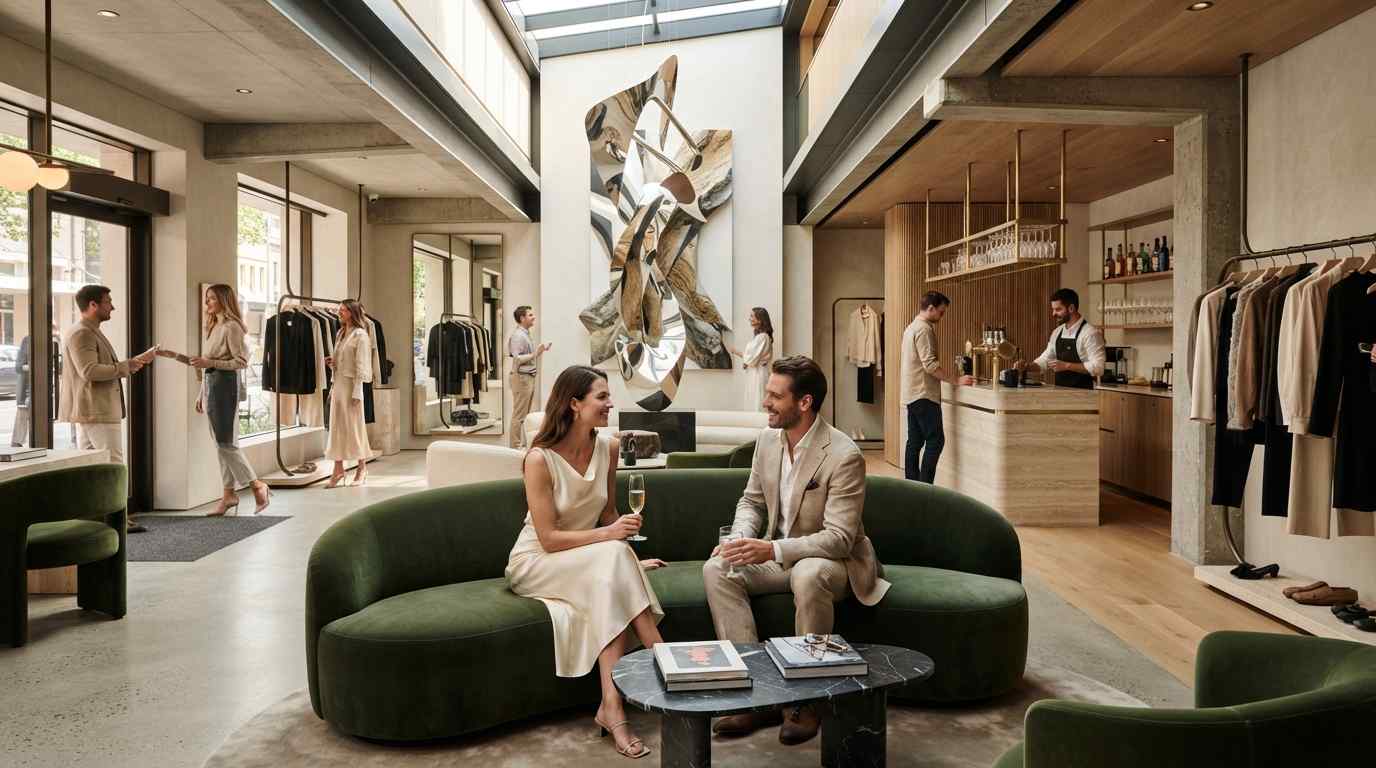
The most interesting brands use the shop to deepen their identity, encourage a more personal relationship and exercise greater control over every interaction. Experiential luxury retail in 2026 is increasingly about meaning rather than spectacle for its own sake.
| Brand | Retail lever | What it brings to luxury in 2026 |
|---|---|---|
| Louis Vuitton | Flagships and cultural experiences | Turns the shop into a destination |
| Hermès | Craftsmanship and selective distribution | Strengthens scarcity, service and consistency |
| Chanel | Control of the experience | Protects positioning and client relationships |
| Prada and Miu Miu | Distinct cultural identities | Connect different brand codes with different audiences |
| Loewe | Art, craft and architecture | Brings product and culture together in one space |
| Bottega Veneta | Discretion and materiality | Translates quiet luxury into the physical environment |
The common thread is coherence. An excellent shop cannot compensate for a weak brand, but poor physical execution can weaken an exceptional one. Design, operations and maintenance therefore need to work towards the same standard.
Five changes redefining luxury retail in 2026
The sector’s trends are easier to understand when viewed as changes in criteria rather than a collection of new ideas. Luxury is reassessing what genuinely deserves investment within the retail environment and which elements no longer create value on their own.
In practice, five shifts are particularly visible in 2026. They can be applied at very different scales, from a major international flagship to a specialist boutique occupying only a modest footprint.
1. From spectacular shops to shops with a purpose
A photogenic installation may attract visitors for a few weeks, but it is unlikely to sustain a retail strategy on its own. The space needs to provide a tangible reason to return: service, personalisation, cultural programming, hospitality, product discovery or access to specific experiences.
This helps explain the growth of hybrid formats and flagships designed as destinations. Spectacle still has a role, but it is increasingly judged by its ability to reinforce the brand’s world rather than by visual impact alone.
2. Hospitality becomes a permanent part of the shop
Cafés, restaurants, private rooms, personalised appointments and lounge areas are increasingly common in premium retail. Hospitality extends the relationship with the brand and changes the pace of the visit.
Operationally, this makes each location more complex. Air conditioning, cleaning, lighting, sound, technical installations and maintenance all need to support spaces with different uses and very little tolerance for visible faults.
3. Technology disappears from view
For years, introducing technology could mean filling the shop with screens. In 2026, the more sophisticated approach is moving in a different direction: the best technology often works behind the scenes.
Customer data, stock management, personalisation, predictive maintenance and tools for shop teams can all improve the experience without forcing visitors to interact constantly with devices. In luxury, removing friction is often more valuable than displaying the technology used to achieve it.
4. Personalisation replaces part of the mass-market logic
The higher the positioning, the less sense it makes to treat every customer in exactly the same way. Recognition, advice and access become part of the wider product experience.
This is where the physical shop has an advantage that is difficult to reproduce digitally: a skilled team can interpret context, preferences, purchase history and non-verbal cues during a conversation. Data helps, but the human relationship continues to carry particular weight in luxury retail.
5. Physical space communicates craftsmanship again
Materials, construction details, bespoke furniture and craft processes are becoming more prominent as a response to the visual uniformity of digital channels. Materiality is once again helping to justify perceived value.
That is one reason why brands such as Loewe, Hermès and Bottega Veneta work so consistently on the relationship between product and space. When a house talks about craft, precision and permanence, the retail environment needs to communicate those same ideas.
Luxury’s less visible challenge: keeping an entire retail network immaculate
Photographs of a new flagship show opening day. The real challenge begins afterwards. The brand experience needs to feel just as exacting on day 300 as it did on day one, even when there are dozens of locations, long trading hours and teams distributed across different cities or countries.
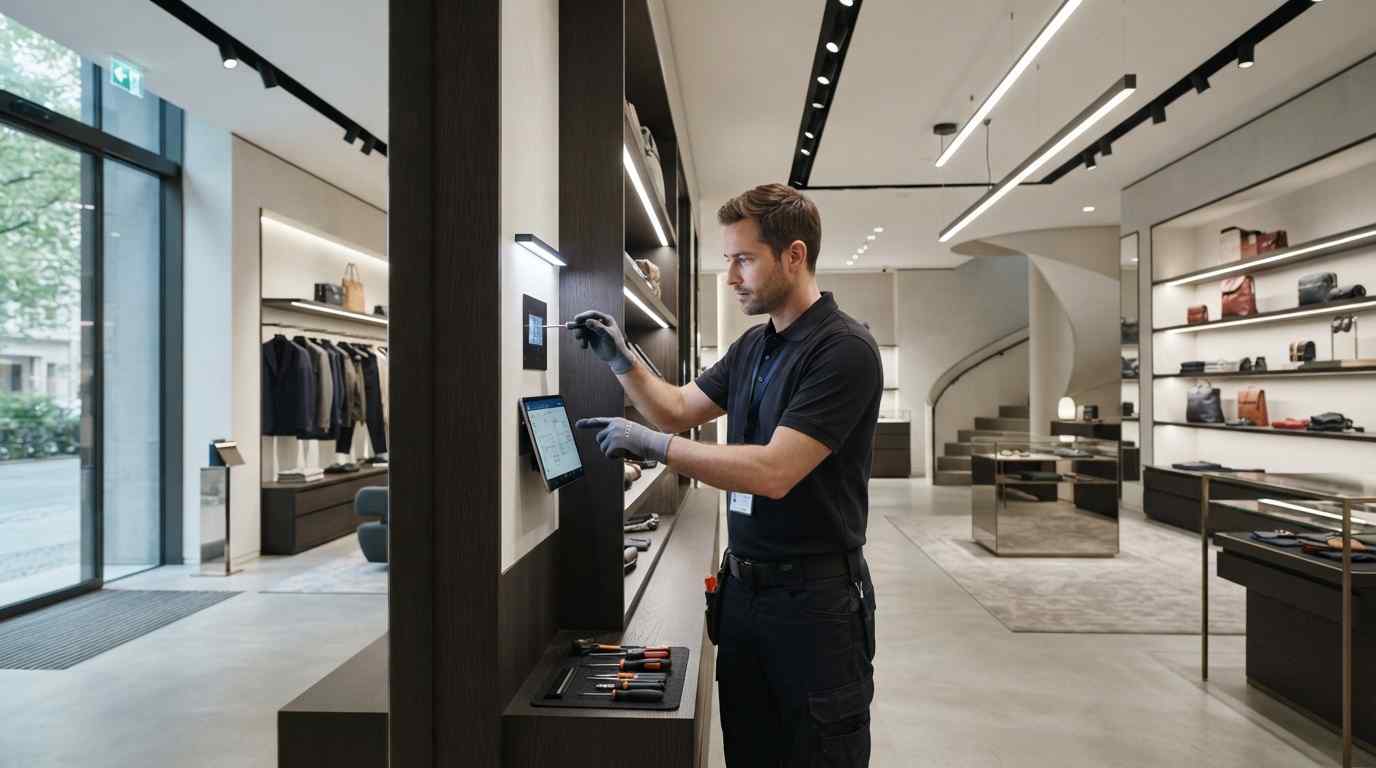
A poorly adjusted light fitting, a faulty door, an uncomfortable temperature or a damaged surface may seem like minor technical issues. To the customer, they form part of a single experience. In luxury retail, there is no meaningful separation between maintenance and brand image.
At Optima Retail, this operational view of the retail environment is central to how we work. When a brand needs to transform or roll out new spaces, we manage store openings, closures and renovations, coordinating delivery, schedules and technical requirements so that each location can begin trading in the intended conditions.
Once the shop is open, continuity becomes the priority. Our preventive maintenance service for retail makes it possible to schedule interventions before certain issues affect operations or become visible to customers. Prevention matters particularly when every detail of the space contributes to the brand’s positioning.
What every retail brand can learn from luxury leaders
A brand does not need to operate in the high-end segment to apply many of these ideas. Luxury brands act as an especially demanding laboratory for physical retail: what becomes standard there often goes on to influence other categories.
The main lesson from 2026 is that investing in a shop means working on experience and operations at the same time. A memorable space requires teams, processes and installations capable of sustaining it. Before refurbishing a network or designing a new flagship, several decisions are worth reviewing:
- Define the role of the shop beyond simply facilitating a transaction.
- Translate brand identity into tangible elements: materials, lighting, service, sound, temperature and customer journey.
- Separate spectacle from usefulness and avoid technology that adds complexity without improving the experience.
- Design with future maintenance in mind, rather than focusing only on how the space looks on opening day.
- Establish repeatable standards when the network operates across several cities or markets.
This final point often determines whether a concept genuinely works at scale. Consistency is one of luxury retail’s least visible assets: customers expect to recognise the same level of quality regardless of the location they visit.
At Optima Retail, we centralise facilities and service management for retail chains, providing international coverage through a single point of contact. If you are planning an opening or refurbishment, or want to review how your store network is maintained, you can contact our team to assess the operational requirements of your locations.
The new face of luxury shows that the physical shop is far from losing relevance. Instead, it is taking on a more demanding role. In 2026, the brands that stand out turn every space into tangible proof of what they promise: service, identity, precision and an experience refined enough to remain exceptional long after the purchase.