A cockroach crossing the shop floor mid-morning, in full view of customers, is not a minor incident: it is an operational crisis that calls for an immediate response, not a call the next day. In shops and retail chains, every minute a pest stays visible multiplies the reputational and hygiene risk, and the protocol the store team follows in those first few minutes shapes both the outcome and the cost of the intervention that follows.
With our retail clients, we see that the most common mistake isn’t failing to call a technician, but taking too long to do so because no one in the store knows what priority to give the incident. This article explains how to recognise an active infestation, exactly what to do the moment it’s spotted, and when the situation stops being scheduled maintenance and becomes an urgent fumigation job.
Warning signs that indicate an active pest infestation in your store
Not every infestation is spotted by seeing the insect or rodent itself. In many cases, the first sign is indirect and appears in areas that sales floor staff don’t check daily: the stockroom, storage areas, plant rooms or air conditioning voids. Spotting these signs before a customer does is what separates a discreet intervention from an image problem.
- Small, dark droppings near skirting boards, low shelving or electrical panels.
- Gnaw marks on cardboard, cabling or recently delivered packaging.
- Grease or dirt trails along skirting boards, a sign of regular rodent movement.
- Dead or live insects in fitting rooms, the storeroom or staff break areas.
- A persistent, unpleasant smell in enclosed or poorly ventilated areas.
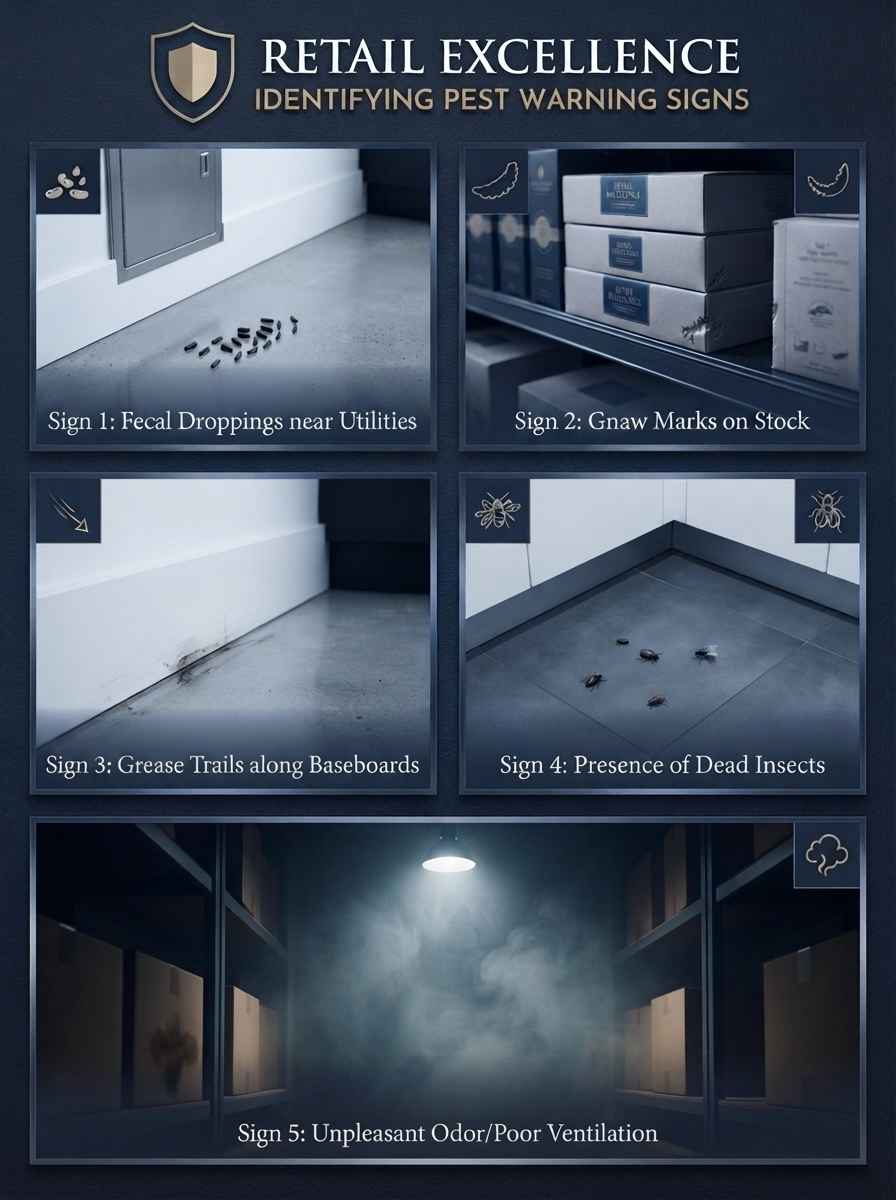
When more than one of these signs appears at once, the infestation has already been active for a while. A pest rarely starts on the day it becomes visible: it usually takes weeks to settle in unnoticed, which is why regular inspection of the stockroom and storage areas matters just as much as keeping the sales floor clean.
What to do the moment you spot a pest in your store
How the team reacts in the first few minutes is what actually stops the incident from turning into a bigger problem. It isn’t about improvising a fix, but about containing the situation and escalating it correctly while the specialist technician is on the way.
- Cordon off the affected area without causing visible alarm among customers present.
- Remove any product, food or stock that may have come into contact with the pest.
- Don’t apply household insecticides on your own: they can scatter the pest into other areas of the store.
- Document the incident with photographs before cleaning or moving anything.
- Notify the store manager and log the incident with the priority it genuinely warrants.
This last point is what makes the real difference for chains with several stores. At Optima Retail, the incident is logged with a priority code (green, amber or red depending on the impact) directly from the store’s own form, so a pest visible during opening hours is automatically classed as code red and triggers the 24/7 emergency service without the store team having to decide who to call first.
When a pest calls for urgent fumigation that can’t wait
Not every pest incident requires immediate intervention: a scheduled preventive treatment can often resolve a one-off, localised presence. The difference lies in the risk of waiting for the next routine visit versus the risk of leaving the pest active while the store stays open to the public.
| Situation detected | Risk of delaying | Recommended action |
|---|---|---|
| Insect visible on the sales floor during opening hours | Immediate reputational damage, negative reviews | Urgent fumigation before the next opening |
| Pest contact with food or textile stock | Stock contamination, possible health sanction | Product removal and urgent disinfection |
| Rodents near electrical panels | Short circuits, fire risk | Intervention within 24 hours |
| Upcoming franchise audit or health inspection | Loss of certification, regulatory non-compliance | Treatment and pest control certificate before the visit |
This table helps with prioritisation, but the final call rests with the technical judgement of whoever inspects the store. What matters is that the store doesn’t wait for the pest to sort itself out: in most cases, the problem simply grows until the next intervention.
Cockroaches in retail premises: why they demand a faster response than other pests
Of all the infestations a store can suffer, cockroaches are probably the ones that generate the most urgency. They breed quickly, hide in hard-to-reach spots — electrical panels, air conditioning units, pipework — and their visible presence alone is enough to make a customer walk out and never return.
With our retail clients, we’ve seen that cockroach infestations often coincide with very specific entry points: delivery packaging, waste areas without daily management, or damp build-up in the stockroom. That’s why, once a cockroach infestation on retail premises is already visible on the shop floor, localised treatment with gels and discreetly placed traps tends to be more effective — and less disruptive to trading — than a general fumigation of the space.
Urgent action in supermarkets and food retail
In food retail, the margin for error is considerably narrower. A pest that is mainly an image problem in a clothing shop becomes, in a supermarket, a direct risk of product contamination as well, and can lead to a health inspection, stock removal or the temporary closure of specific sections.
Urgent disinfection in supermarkets has to combine three things at once: eliminate the pest, ensure the affected product is removed, and document the entire response so it can be evidenced to health authorities if needed. Delaying any one of these three steps, even by a few hours, is what turns a manageable incident into a problem with legal consequences.
Why choose an urgent pest control company that specialises in retail
Not every pest control company is set up to work in the real conditions of a store open to the public: opening hours that can’t be interrupted, a brand image to protect and, for chains, several stores that need the same technical standard applied consistently. At Optima Retail, we run pest control under the same pest control service we use for the rest of the store’s maintenance, with a single point of contact for the whole chain.
That has a practical advantage when urgency strikes: there’s no need to source and vet a new supplier in the middle of a crisis, because the protocol, the technician and the digital reporting are already in place. Our quality control department, backed by Bureau Veritas, checks every intervention through satisfaction surveys and regular audits, so the same standard applies whether the store is in Barcelona or part of a chain with locations across several countries.
If your team has spotted signs of a pest or needs urgent fumigation before it affects the day’s trading, the sooner the incident is logged, the smaller the impact on sales, stock and brand image.